
 Software Architecture
Key Takeaway / Executive Summary
Migrating from a monolithic architecture to microservices should never be done through a 'big bang' rewrite. Instead, adopt an incremental migration strategy using the Strangler Fig pattern. Isolate bounded contexts, decouple database dependencies, route traffic via an API Gateway, and establish robust distributed observability before writing microservice code.
Introduction
Monolithic architectures are outstanding for getting products to market quickly. However, as teams grow, codebases expand, and traffic scales, monoliths can become bottlenecks. Deployment pipelines slow down, continuous integration test suites take hours, and a failure in one module can bring down the entire application.
Migrating to microservices solves scaling and team autonomy issues, but it introduces distributed system complexity, network latency, data consistency challenges, and operational overhead. In this guide, we break down a pragmatic, battle-tested playbook for breaking down monoliths safely.
When to Migrate (and When to Stay Monolithic)
Before writing any code or provisioning infrastructure, you must evaluate whether microservices are actually necessary. Microservices are an organizational and architectural tool to solve scale problems, not a silver bullet.
Core Indicators That It's Time to Migrate
- Deployment Bottlenecks: Multiple engineering teams blocking each other from releasing independent features.
- Selective Scaling Needs: A single resource-intensive module (e.g., video processing or search indexing) requiring independent CPU/Memory scaling.
- Blast Radius Containment: A bug in a non-critical module (e.g., PDF generation) repeatedly taking down core checkout or authentication paths.
- Domain Isolation: Clear operational boundaries where specialized sub-teams own distinct data domains.
Step-by-Step Execution Plan for Migration
Follow this proven multi-step operational roadmap to safely extract microservices without downtime or data corruption.
Step 1 — Identify Bounded Contexts (Domain-Driven Design)
Start by auditing your existing monolith using Domain-Driven Design (DDD) principles. Identify natural logical boundaries in your code. map out domain entities, business logic, and database access patterns to locate cohesive modules (e.g., Billing, Inventory, User Auth, Notifications).
Step 2 — Implement an API Gateway Proxy Layer
Before extracting services, place an API Gateway (such as NGINX, Traefik, or Kong) in front of your legacy monolithic application. The API Gateway acts as a reverse proxy, allowing you to seamlessly reroute API traffic from legacy monolith endpoints to new microservices without forcing clients or frontend applications to update their base URLs.
Step 3 — Apply the Strangler Fig Pattern
The Strangler Fig pattern allows you to gradually replace specific components of your monolithic system with microservices until the monolith no longer exists. Extract one small, low-risk module first (like Notifications or Media Processing) to establish your deployment and monitoring pipeline.
// NGINX Proxy Configuration Example for Incremental Rerouting
server {
    listen 80;
    server_name api.example.com;

    # Extracted Microservice (Notifications)
    location /api/v1/notifications {
        proxy_pass http://notifications-service.internal:8080;
        proxy_set_header Host $host;
    }

    # Legacy Monolith Route (Fallback for all remaining traffic)
    location / {
        proxy_pass http://legacy-monolith.internal:8000;
        proxy_set_header Host $host;
    }
}
Step 4 — Decouple the Monolithic Database
The hardest part of microservices migration is data storage. Microservices must strictly own their own database schemas (Database-per-Service pattern). Never allow a microservice to query the monolithic database directly.
Database Decoupling Sequence
- Logical Separation: Create isolated schemas inside the existing database instance.
- Code Isolation: Refactor the monolith code so queries do not cross schema boundaries or rely on SQL JOINs across domain entities.
- Physical Extraction: Move the isolated schema out to a dedicated target database server.
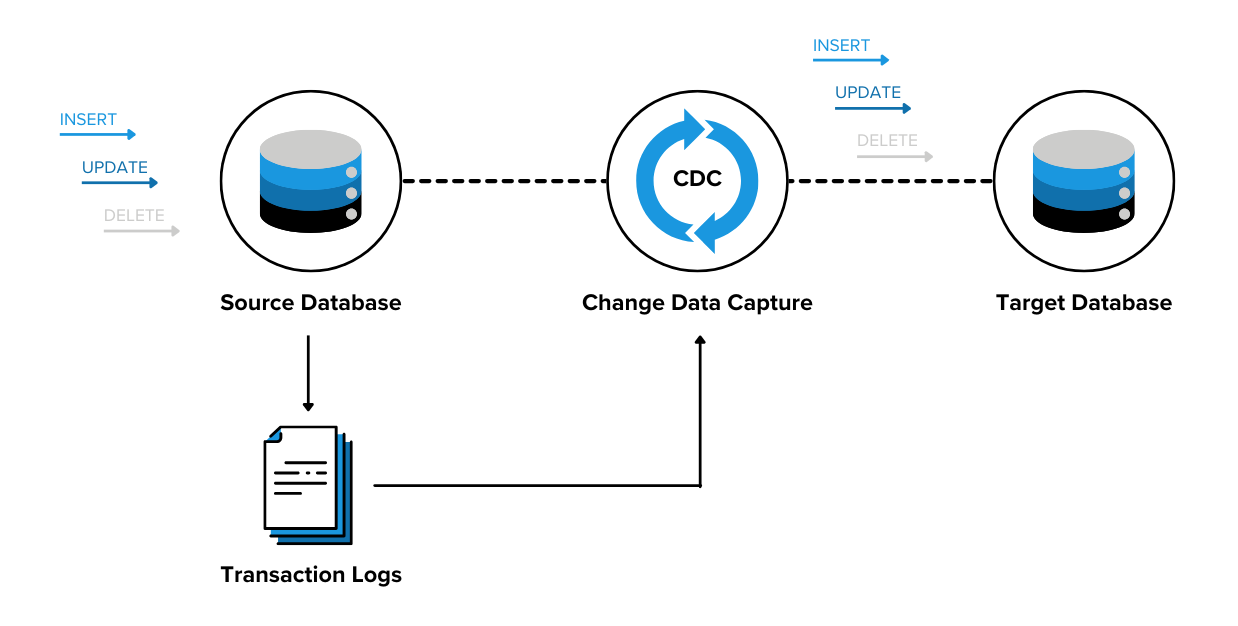
- Event Driven Syncing: Use Change Data Capture (CDC) tools like Debezium or Kafka to sync asynchronous state across services.
Step 5 — Establish Distributed Observability and Tracing
In a microservices architecture, a single incoming user request might cross 5 distinct services over the network. Without centralized logs and tracing, debugging performance bottlenecks or 500 server errors becomes nearly impossible.
// Express.js Middleware: Propagating OpenTelemetry Trace IDs
import { trace, context } from "@opentelemetry/api";

app.use((req, res, next) => {
  const currentSpan = trace.getSpan(context.active());
  const traceId = currentSpan?.spanContext().traceId;

  // Attach correlation ID to response headers for client debugging
  if (traceId) {
    res.setHeader("X-Trace-ID", traceId);
  }

  next();
});
Best Practices vs. Common Pitfalls
What to Do
- Start Small: Extract non-critical, self-contained business modules first to validate build and deployment pipelines.
- Use Asynchronous Messaging: Embrace message brokers like RabbitMQ or Apache Kafka for inter-service communication to decouple workloads.
- Enforce API Versioning: Use strict RESTful or gRPC APIs with explicit contract versioning (e.g., /api/v1/).
- Automate Deployment Early: Establish CI/CD pipelines and automated integration tests before spinning up new services.
What to Avoid
- The 'Distributed Monolith': Creating microservices that share a central database or rely heavily on synchronous HTTP calls.
- Big Bang Rewrites: Attempting to rewrite the entire monolithic architecture from scratch in a separate branch.
- Premature Microservices: Splitting up codebases when your domain rules or startup business models are still rapidly changing.
- Ignoring Network Latency: Assuming inter-service network calls are as fast or reliable as in-memory function calls.
Frequently Asked Questions (FAQ)
Q1: What is the Strangler Fig pattern in microservices migration?
The Strangler Fig pattern is an architectural strategy where you incrementally extract features from a monolithic application into standalone microservices. Over time, new services gradually 'strangle' and replace the legacy monolith until the monolithic system can be decommissioned completely.
Q2: How do you handle distributed transactions across microservices?
Avoid ACID transactions across service boundaries. Instead, implement eventual consistency using asynchronous patterns like the Saga Pattern (orchestrated or choreographed transaction sequences) or two-phase commit protocols.
Q3: Should microservices share a single unified database?
No. Shared databases create tight coupling, breaking service autonomy and introducing single points of failure. Adhering to the 'Database-per-Service' pattern ensures each microservice can alter its schema and scale independently.
Conclusion
Migrating from a monolith to microservices is a multi-stage journey of organizational and architectural refinement. By utilizing Domain-Driven Design, the Strangler Fig pattern, an API Gateway proxy, and asynchronous data sync, you can modernize your application with zero downtime and minimal risk.
References & Authoritative Sources
- Martin Fowler - Strangler Fig Application Pattern - https://martinfowler.com/bliki/StranglerFigApplication.html
- Microservices.io - Patterns for Microservices Migration - https://microservices.io/patterns/refactoring/
- AWS Architecture Center - Monolith to Microservices Migration Guide - https://aws.amazon.com/microservices/
- Domain-Driven Design Reference by Eric Evans - https://domainlanguage.com/ddd/