

- 25 Views
The Power of the Virtual DOM in React Explained Simply
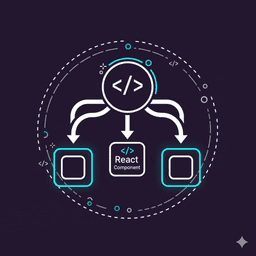
The Virtual DOM is one of the core concepts that makes React fast and efficient. Unlike traditional DOM manipulation, which can be slow due to frequent reflows and repaints, the Virtual DOM allows React to perform minimal updates by comparing the previous and current states of the UI. This diffing process ensures only the necessary parts of the UI are updated, improving performance, especially in complex applications. Understanding how the Virtual DOM works is crucial for writing optimized React code and building scalable, high-performance web applications.
What is the Virtual DOM?
The Virtual DOM is an in-memory representation of the real DOM elements. React keeps a lightweight copy of the UI in memory and uses it to determine the minimal number of changes required to update the actual DOM. By doing this, React avoids costly direct manipulations of the DOM and ensures smoother performance.
Key Points About Virtual DOM:
- A lightweight JavaScript object representation of the real DOM
- Enables fast UI updates by minimizing direct DOM manipulation
- Serves as the foundation for React’s efficient rendering
How React Uses the Virtual DOM
When a component’s state or props change, React creates a new Virtual DOM tree representing the updated UI. It then compares this new tree with the previous one using a diffing algorithm. React calculates the minimal set of changes needed and updates only those parts in the real DOM. This process significantly reduces rendering time and enhances user experience.
Steps in React’s Virtual DOM Process:
- State or props change triggers a re-render
- New Virtual DOM tree is created
- Diffing algorithm compares old and new trees
- Minimal updates are applied to the real DOM
Example: Updating a List Efficiently
Imagine rendering a list of 1000 items. Without the Virtual DOM, updating a single item would require re-rendering the entire list. With React’s Virtual DOM, only the item that changed is updated in the real DOM, saving processing time and improving performance.
1const [items, setItems] = useState([...Array(1000).keys()]);
2function updateItem(index, newValue) {
3  const newItems = [...items];
4  newItems[index] = newValue;
5  setItems(newItems);
6}
Virtual DOM Benefits in Large Lists:
- Only changed items are updated
- Reduces unnecessary re-renders
- Improves performance for large datasets
Why the Virtual DOM Matters for Performance
Direct DOM manipulations are expensive and slow because the browser recalculates layout, style, and repaint for every change. The Virtual DOM minimizes these operations by batching updates and only modifying the actual DOM where necessary. This makes React ideal for applications with dynamic, interactive UIs.
Performance Advantages:
- Minimizes layout recalculations and repaints
- Improves rendering speed
- Ensures smoother and responsive UI
Common Misconceptions About the Virtual DOM
Some developers assume the Virtual DOM is a magical performance booster for all scenarios. While it improves efficiency, unnecessary re-renders or deeply nested components can still cause performance issues. Understanding how and when React updates the Virtual DOM helps optimize components effectively.
Tips to Avoid Performance Bottlenecks:
- Use React.memo to prevent unnecessary re-renders
- Avoid heavy computations inside render
- Break large components into smaller, manageable pieces
Conclusion
The Virtual DOM is a key innovation that allows React to update the UI efficiently and maintain high performance. By understanding how it works and following best practices, developers can write optimized React applications that are fast, scalable, and maintainable.
Key Takeaways:
- Virtual DOM minimizes direct DOM manipulations
- Diffing algorithm ensures only necessary updates
- Optimizing component structure improves performance
- Use memoization and proper state management for efficiency
References
Useful resources to learn more about the Virtual DOM and React rendering: